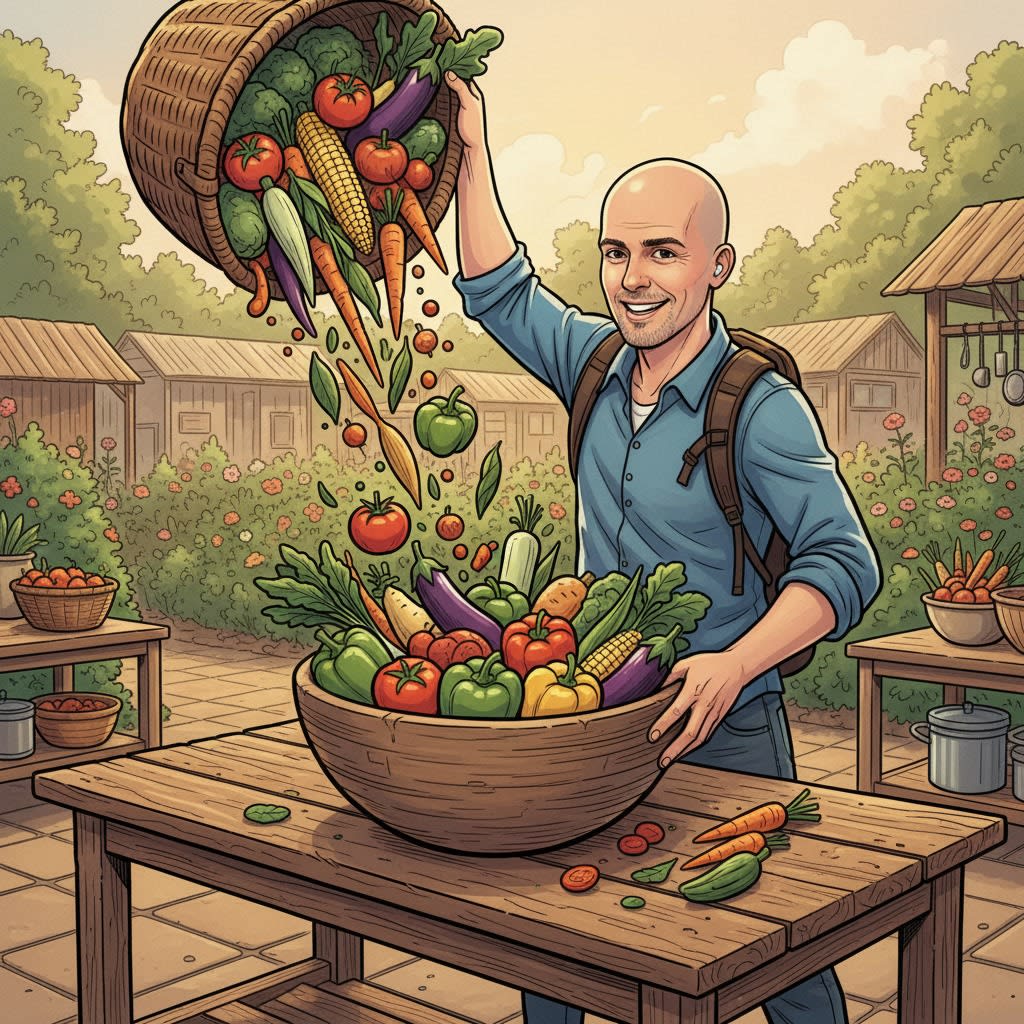
Eat Your Way to a Healthier Colon: The Top Foods Gastroenterologists Actually Recommend
I used to think colon health was something you only worried about after a scary diagnosis — one of those topics that lived in the waiting room of a specialist's office, not at the kitchen table. Then I started digging into the research, and something shifted. I realized that to eat your way to a healthier colon is not a medical intervention. It is an everyday act, accessible to almost everyone, starting with the very next meal we cook together. The science is genuinely exciting, and the best part? A lot of what protects your colon is probably already sitting in your pantry.
- Why Your Colon Deserves More Credit (And More Fiber)
- The Plant Foods Your Gut Bacteria Are Literally Waiting For
- Fermented Foods and the Living Cultures That Support Digestive Wellness
- The Anti-Inflammatory Foods Gastroenterologists Keep Coming Back To
- Whole Grains Over Refined: A Simple Swap With Serious Colon Benefits
- Hydration and the Foods That Help Your Colon Do Its Job
- Building a Colon-Healthy Plate You Actually Want to Eat
Why Your Colon Deserves More Credit (And More Fiber)

I still remember the first time I read a proper breakdown of the gut microbiome — not a scary headline about disease, but a genuine description of what is happening inside us right now. Trillions of microorganisms, living in dynamic community, fermenting fibers we cannot digest, sending signals to our immune system, shaping our mood and energy. I felt amazed. Not anxious. Amazed.
That feeling is exactly the right frame for thinking about your colon. This is not a problem organ. It is one of the most underappreciated powerhouses in the human body. Every day, quietly and without complaint, your colon absorbs water and electrolytes, ferments dietary fiber for colon health into short-chain fatty acids that nourish your gut lining, and coordinates immune responses that protect you from pathogens and inflammation. Roughly 70 percent of your entire immune system lives in or near your gastrointestinal tract. The colon is not waiting to cause trouble — it is actively keeping you well.
Gastroenterologists are consistent on one point above almost all others: the single most impactful dietary lever most of us are not pulling is fiber. The average adult in many Western countries consumes somewhere around 15 grams of fiber per day, against a recommended intake of 25 to 38 grams. That gap matters enormously. Fiber feeds the beneficial bacteria that line and protect the colon wall, speeds transit time so waste does not linger, and has been associated in multiple large studies with significantly reduced risk of colorectal cancer.
The invitation here is not to panic about that gap. It is to feel curious about it. What would it feel like to give this remarkable organ a little more of what it thrives on?
The Plant Foods Your Gut Bacteria Are Literally Waiting For
Here is something I find genuinely beautiful about prebiotic plant foods: your gut bacteria have been waiting for them. Not metaphorically — specific species of beneficial bacteria in your colon produce enzymes designed to ferment the inulin in garlic and onions, the fructooligosaccharides in leeks and asparagus, the resistant starch in legumes and oats. These microbes are already there, already equipped. You just have to feed them.
Legumes, oats, garlic, onions, leeks, asparagus — these are the heavy hitters. They selectively nourish beneficial strains like Bifidobacterium and Lactobacillus while crowding out less helpful species. But here is the principle that changed how I shop: diversity matters more than any single superfood. Research from the British Gut Project found that people who ate 30 or more different plant foods per week had significantly more diverse gut microbiomes than those eating fewer than 10. Diversity is the goal, not perfection.
That realization sent me on a fun kitchen experiment. I started making black bean energy bars — no refined sweeteners at all. Dates do the work instead, binding everything together while adding their own prebiotic fiber to the mix. They are genuinely delicious, and every time I make a batch I am reminded that eating for your microbiome does not mean eating sadly. It means eating abundantly.
Think about the last potluck or family gathering you attended. There was probably a grain salad, a bean dish, roasted vegetables, fruit on the side. We are often so much closer to 30 plants a week than we realize — we just have not been counting them as a gift. What plant foods are already showing up regularly on your table that you could lean into even more?
Fermented Foods and the Living Cultures That Support Digestive Wellness

Fermented foods are one of the oldest technologies humans have ever developed, and almost every food culture on earth independently arrived at them. Korean kimchi. German sauerkraut. Eastern European kefir. Japanese miso. Indian lassi. West African dawadawa. These are not health trends — they are centuries of accumulated wisdom about fermented foods and digestive wellness, born from observation and passed down through generations of home cooks who knew, intuitively, that these foods made people feel good.
Gastroenterologists now have language for why. Fermented foods introduce live beneficial bacteria into the gut environment, reduce markers of gut inflammation, and support the integrity of the mucosal lining — the protective layer that sits between your gut contents and your bloodstream. A 2021 study from Stanford found that a diet high in fermented foods increased microbiome diversity and reduced inflammatory markers, even over a short intervention period. The effects were measurable and significant.
The options are wonderfully accessible. Yogurt with live active cultures. Kefir. Kimchi. Sauerkraut. Miso. Tempeh. Most of these cost a few dollars at any grocery store. You do not need expensive probiotic supplements when whole fermented foods are sitting on the shelves right now, doing the same job in a form your body has recognized and benefited from for millennia.
My own relationship with sauerkraut started as pure experimentation. I bought a jar, put it in the fridge, and started adding it to things — alongside eggs in the morning, tucked into a grain bowl at lunch, spooned next to roasted chicken at dinner. It never felt medicinal. It felt like I was playing. For many readers, these foods may already be part of your heritage kitchen. If they are, that is a profound gift worth recognizing and returning to.
The Anti-Inflammatory Foods Gastroenterologists Keep Coming Back To

Chronic low-grade inflammation in the gut is one of the central mechanisms behind colorectal disease, and it is something gastroenterologists talk about constantly — not to alarm us, but because the flip side of that conversation is so encouraging. The anti-inflammatory foods gut lining protection relies on are not specialty items. They are berries and leafy greens and fatty fish and turmeric and extra-virgin olive oil. They are the backbone of Mediterranean and many Asian dietary traditions that populations have thrived on for generations.
The science behind them is worth understanding in plain terms. Polyphenols — found abundantly in berries, dark leafy greens, and olive oil — essentially turn down the volume on inflammatory signaling in the gut lining. Omega-3 fatty acids from fatty fish like salmon, sardines, and mackerel do something similar through a different pathway, reducing the production of pro-inflammatory compounds. Together, these nutrients create an environment in the colon that is less hospitable to the kind of chronic irritation that, over years, can lead to more serious problems.
I started cooking with extra-virgin olive oil as my default fat years before I understood any of this. I chose it because I loved the flavor — the grassy, peppery richness it brings to a simple vegetable sauté or a piece of grilled fish. Learning later that it carried meaningful colon-protective benefits felt like discovering a bonus I had already been collecting without knowing it.
That is the spirit of this entire conversation, really. Traditional food cultures were not building anti-inflammatory protocols. They were building meals that tasted good and kept people well. The wisdom was already there. We are just learning the molecular language to describe it.
Whole Grains Over Refined: A Simple Swap With Serious Colon Benefits

Swap refined grains for whole grains — brown rice, quinoa, whole wheat, barley, farro — and you are not just adding fiber. You are delivering intact phytochemicals, B vitamins, and crucially, resistant starch, which gastroenterologists consistently describe as one of the most underappreciated colon-protective nutrients in the human diet.
Resistant starch is exactly what it sounds like: starch that resists digestion in the small intestine and arrives in the colon largely intact, where your gut bacteria ferment it into butyrate. Butyrate is a short-chain fatty acid that is essentially the preferred fuel of colonocytes — the cells lining your colon. It reduces inflammation, supports the integrity of the gut barrier, and has been associated in research with lower colorectal cancer risk. Whole grains resistant starch content varies, but oats, barley, and cooled cooked grains are particularly rich sources.
The swap itself is genuinely easy. I made the switch to whole grain pasta expecting to notice a significant difference and found that after about a week, I stopped thinking about it entirely. The texture is slightly heartier, yes — but heartier turned out to mean more satisfying. I was less likely to want a second portion not because I was restraining myself but because I was actually full.
The frame here is addition, not subtraction. You are adding flavor complexity, adding nutrition, adding the kind of sustained energy that comes from slower-digesting carbohydrates. Try cooking a big batch of farro on a Sunday and bringing it to a friend's place to see what everyone creates from it. Make it social. That is how food changes stick — not through willpower, but through shared pleasure.
Hydration and the Foods That Help Your Colon Do Its Job

The colon is, among other things, a water management system. As food waste moves through, the colon reabsorbs water and electrolytes back into the body — a remarkable piece of efficiency. When we are well hydrated, transit time stays healthy and the colon wall has less prolonged contact with waste material. When we are chronically under-hydrated, things slow down in ways that are uncomfortable in the short term and potentially problematic over time.
Hydration colon function is often discussed purely in terms of how many glasses of water you drink, but gastroenterologists point to a simpler, more enjoyable approach: eat water-rich foods at every meal rather than tracking ounces obsessively. Cucumbers, celery, watermelon, citrus, zucchini — these foods are simultaneously hydrating and fiber-rich, which means they support colon health through two pathways at once.
I noticed this without planning to. In summer, when I naturally reach for lighter, water-dense foods — a cucumber salad, a slice of watermelon after dinner, zucchini sautéed with olive oil and herbs — I simply feel better digestively. I was not thinking of it as a strategy. I was responding to warmth and seasonal abundance. The colon-protective benefit was built into the pleasure.
These are also, notably, some of the cheapest and most joyful foods available, especially in warmer months. Watermelon at a backyard gathering. Citrus squeezed over fish. Celery sticks alongside a bowl of hummus. Light, festive, fresh, and quietly doing good work.
Building a Colon-Healthy Plate You Actually Want to Eat

None of the sections above require you to rebuild your eating from scratch. What gastroenterologists and researchers consistently describe as a colon-healthy meal pattern maps onto a simple visual framework for colon-healthy meal planning: roughly half your plate filled with vegetables and fruit, one quarter whole grains, one quarter protein — including legumes or fatty fish as often as possible — and a fermented food somewhere at the table, even in small amounts.
That last piece — the fermented food — was the mental shift that made this feel festive rather than clinical for me. I stopped thinking of kimchi or sauerkraut as supplements and started treating them as condiments. A spoonful alongside roasted vegetables. A dollop of yogurt over a grain bowl. Miso stirred into a broth. Suddenly my plate had more texture, more layers, more life. It did not feel like a health protocol. It felt like a real meal.
This framework is not a meal plan. It is not a diet. It is a loose template that bends to your culture, your taste, your season, your budget. The Mediterranean grandmother making a pot of bean stew with a side of greens and crusty whole grain bread has always been following it. The Korean home cook serving rice alongside kimchi and a piece of grilled fish has always been following it. The wisdom was never missing — it just sometimes gets drowned out by louder noise.
So here is the question I want to leave you with: what is one food from everything we have talked about today that already lives in your kitchen — something you already love and reach for — that you could cook with just a little more intention this week?
The invitation at the heart of all of this is not to overhaul everything you eat. It is to look at your table with fresh appreciation and ask what is already working. Because the path to eating your way to a healthier colon does not begin with a list of things you are doing wrong. It begins with recognizing the good food you are already reaching for — the beans in your pantry, the jar of sauerkraut in your fridge, the olive oil by your stove, the watermelon you cut up without thinking twice — and simply doing a little more of it, together.
Comments
Leave a comment
Keep Reading

Spring Into Health: The Anti-Inflammatory Foods Nutrition Experts Say You Should Be Eating Right Now

Turmeric's Real Power: What the Science Says and How to Actually Get the Benefits

Your Doctor Probably Never Told You This: How Controlling Insulin Could Be the Most Important Longevity Decision You Make